

NHRC, India, organises an Open House Discussion on “Measures to Curb Spurious Medicines in India”
Press release
National Human Rights Commission
New Delhi: 26th February 2026
NHRC, India, organises an Open House Discussion on “Measures to Curb Spurious Medicines in India”
NHRC Member, Justice (Dr.) Bidyut Ranjan Sarangi chairing the meet emphasises risks of isolated regulatory challenges translating into large-scale human distress if not addressed decisively and systematically
NHRC Member Smt. Vijaya Bharathi Sayani says, the issue requires to be urgently addressed by placing in place strengthened oversight and accountability mechanisms in the pharmaceutical ecosystem
Secretary General, Shri Bharat Lal highlights spurious drugs being different from substandard drugs but both requirecoordinated institutional action to combat the menace
Among various suggestion from the discussions involving multi-stakeholders stress upon the need to establish a comprehensive, centralised databank on spurious and sub-standard medicines, integrating inputs from enforcement agencies, regulators and states
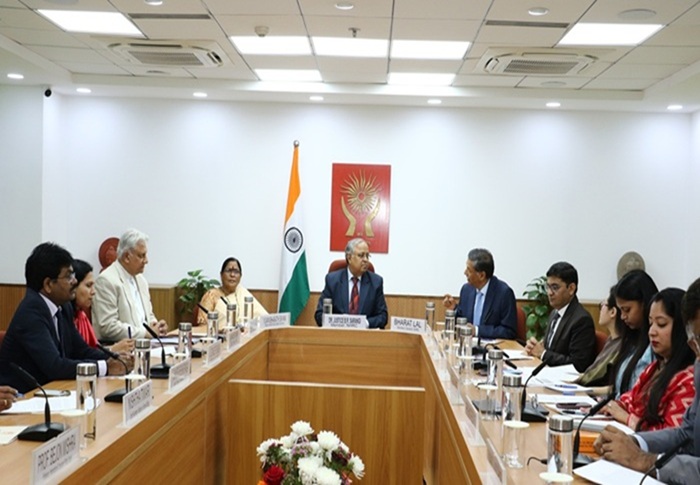
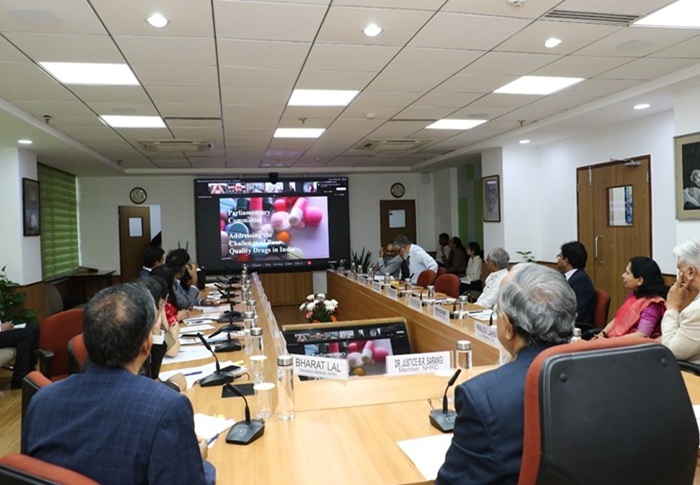
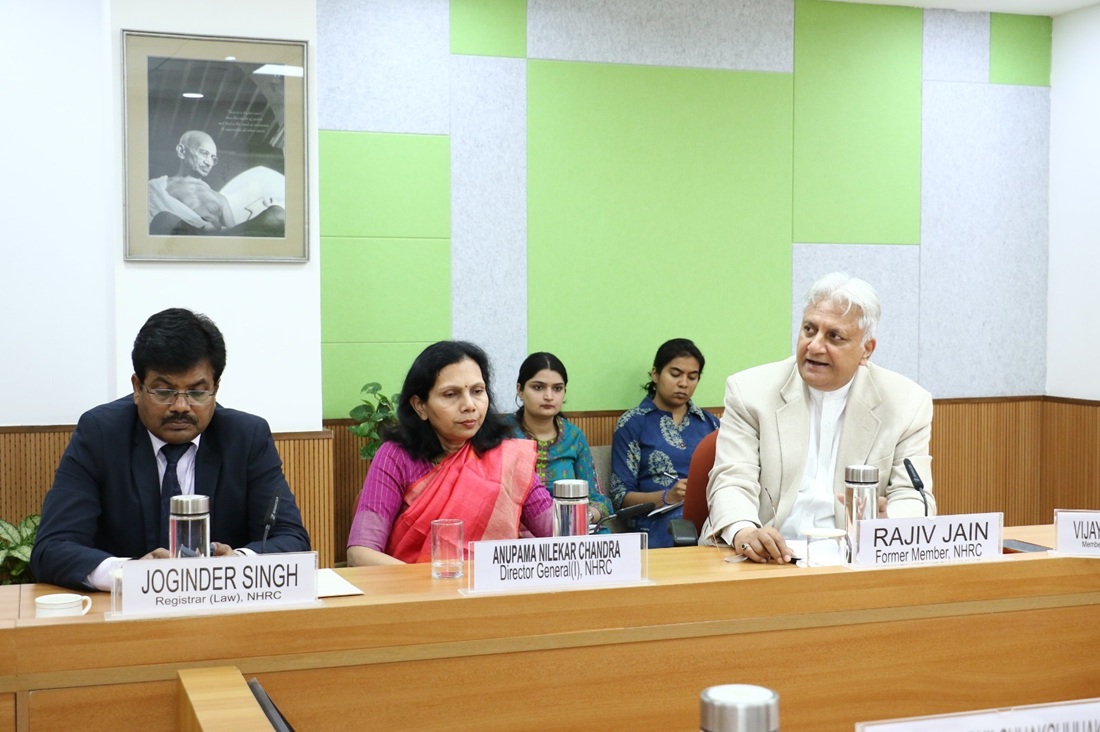
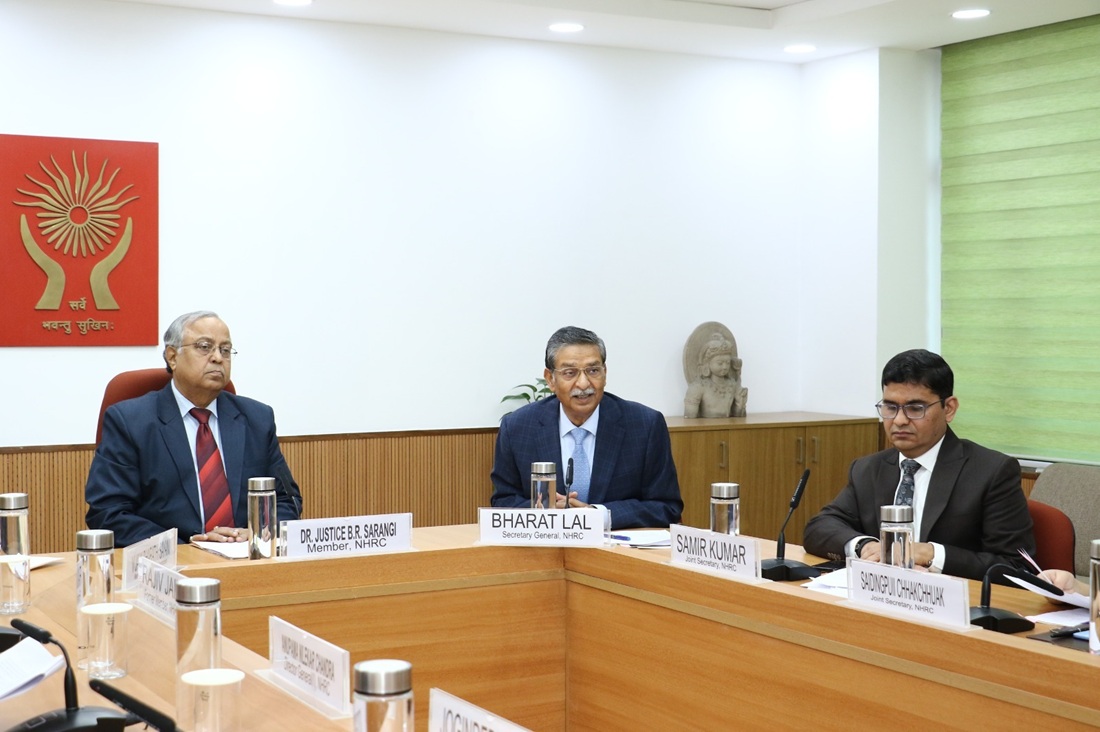
The National Human Rights Commission (NHRC), India organised an Open House Discussion (OHD) in hybrid mode on the theme ‘Measures to Curb Spurious Medicines in India’ at its premises in New Delhi. NHRC Member, Justice (Dr.) Bidyut Ranjan Sarangi chaired it. NHRC Member, Smt. Vijaya Bharathi Sayani; Former Member, NHRC, Shri Rajiv Jain; Secretary General, Shri Bharat Lal; Director General (Investigation), Smt. Anupama Nilekar Chandra; Registrar (Law), Shri Joginder Singh; Joint Secretaries, Shri Samir Kumar, Smt. Saidingpuii Chhakchhuak; along with senior government functionaries from the centre and state governments; regulators; law enforcement authorities; domain experts and representatives from the pharmaceutical sector participated.
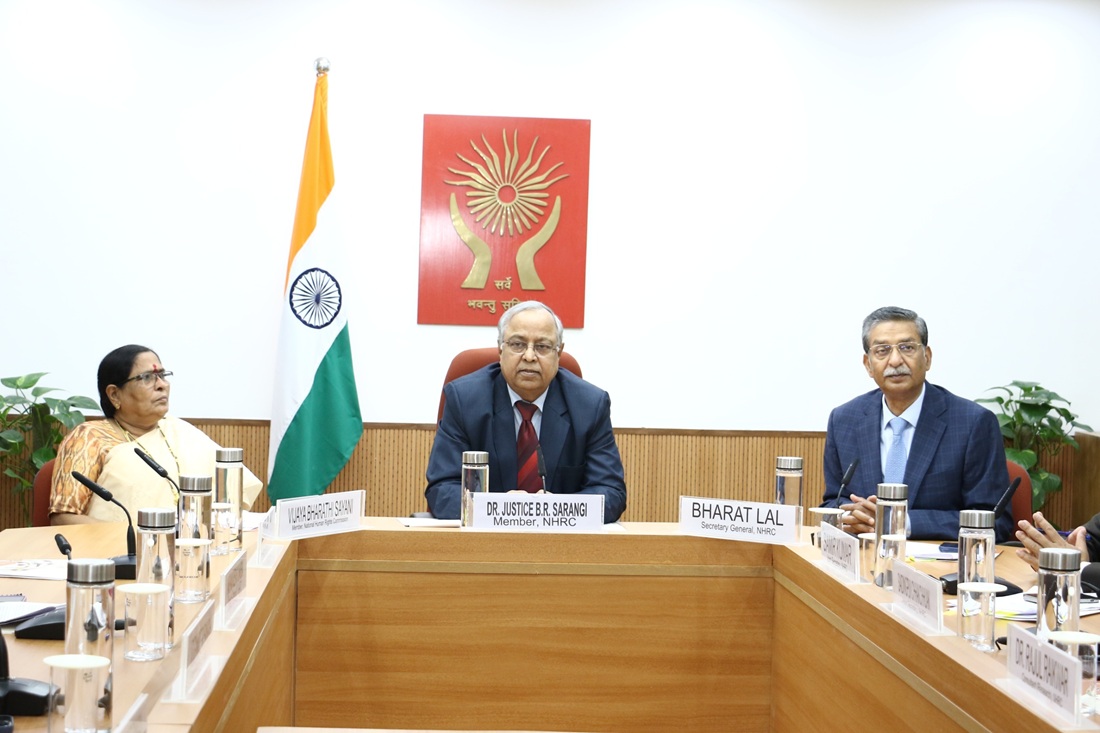
Justice (Dr.) Bidyut Ranjan Sarangi said that in a country as vast and diverse as India, even isolated regulatory challenges can translate into large-scale human distress if not addressed decisively and systematically. He said that growing threat posed by spurious, substandard and falsified medicines and its direct implications on the right to life and health, demands coordinated, multi-sectoral action to address this grave issue of human rights violation.
|
|
NHRC Member, Smt. Vijaya Bharathi Sayani reflected on the human cost of substandard treatment. She recalled how a member of her family suffered permanent loss of eyesight due to improper treatment and the use of poor-quality medicines. She said that the issue requires to be urgently addressed by placing in place strengthened oversight and accountability mechanisms in the pharmaceutical ecosystem.
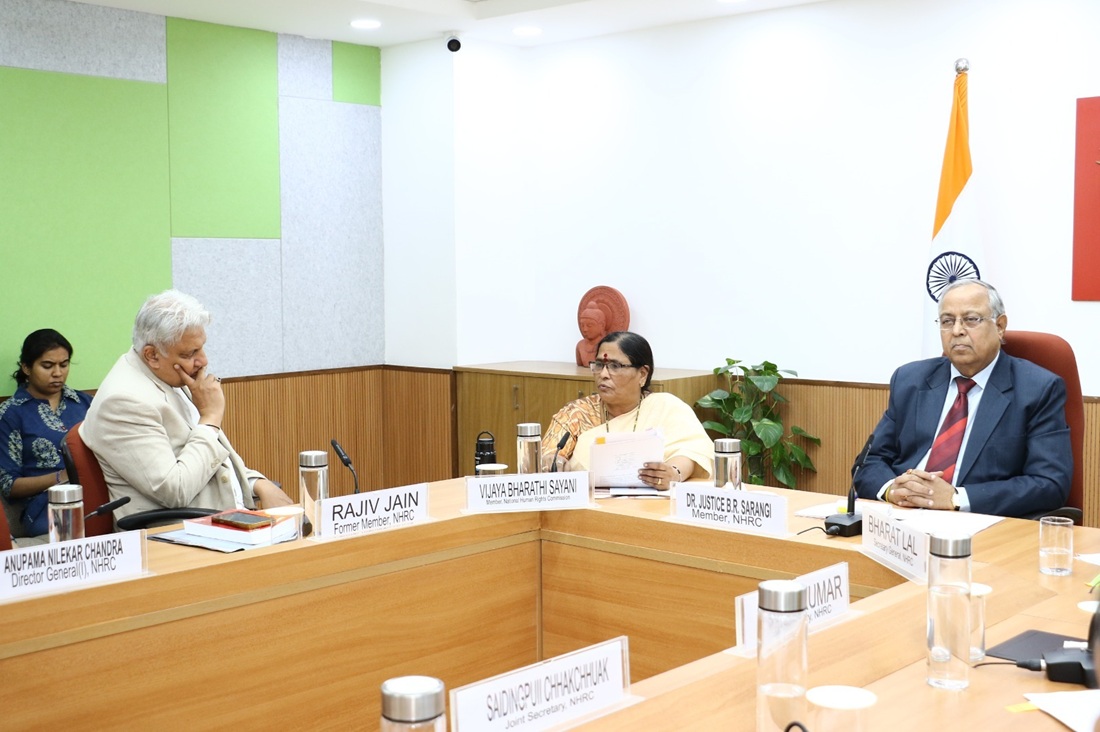
Former NHRC Member, Shri Rajiv Jain emphasised that to strengthen enforcement and deterrence, there is a need for establishing special drug courts for expeditious trial of the accused; real-time drug testing mechanisms; mandatory QR codes and track-and-trace systems, including blockchain-based supply chain authentication. He also stressed upon compulsory use of NABL-accredited laboratories; AI-based anomaly detection in distribution patterns; surprise inspections; strengthened whistle-blower protection; digital case tracking; creation of a centralised national database on spurious drug cases; improved public helplines; and examination of regulatory safeguards concerning e-prescriptions.
Before this, setting the tone for deliberations, NHRC Secretary General Shri Bharat Lal underscored that the discussion is focused on spurious drugs but both spurious and substandard medicines impacts the right to life and health, calling for coordinated institutional action to combat the menace. He emphasised that citizens consume medicines in good faith, trusting the state’s obligation to safeguard life and dignity and cautioned that any breach may result in violation of human rights of the victims. Stressing that ‘medicines must heal, not harm,’ he also highlighted the clear distinction between ‘spurious drugs’ in different manifestations defined under Section 17-B of the Drugs and Cosmetics Act, 1940 and ‘substandard drugs’ (out-of-specification authorised products failing quality standards/specifications). Citing the National Survey on Drugs, he noted that about 10% of government samples were found substandard.
Shri Lal further said that spurious drugs are produced and distributed as part of criminal activity with no clearly identifiable manufacturer, which require criminal investigation, whereas manufacturers of substandard drugs can be traced. He said that the NHRC has been very proactively taking suo motu cognizance of such reported incidents of rights violation due to alleged consumption of spurious medicines. In this context he referred to its one of the recent notices sent in October 2025 to the Governments of Madhya Pradesh, Rajasthan and Uttar Pradesh and to Union health and regulatory authorities following media reports of children allegedly succumbing after consuming contaminated cough syrups. The Commission directed a comprehensive supply-chain investigation and mandated state laboratories to submit sample test reports, underscoring the urgency of coordinated regulatory action.
Dr. Keshav Kumar, Special Rapporteur, NHRC, who has undertaken extensive research on the subject, proposed enhanced monitoring, creation of central and state-level task forces, strengthening of regulatory compliance, improved inter-agency coordination, training of law enforcement and judicial officers, victim compensation mechanisms and collaboration with international bodies. He highlighted trends, including low conviction rates in spurious drug cases, significant delays in investigation and adjudication and a higher prevalence of substandard samples in certain procurement channels. He emphasised that there is a need to clearly distinguish between “spurious drugs” - counterfeit, fake or deliberately mislabelled products and “substandard drugs” - genuine products that fail to meet prescribed quality standards.
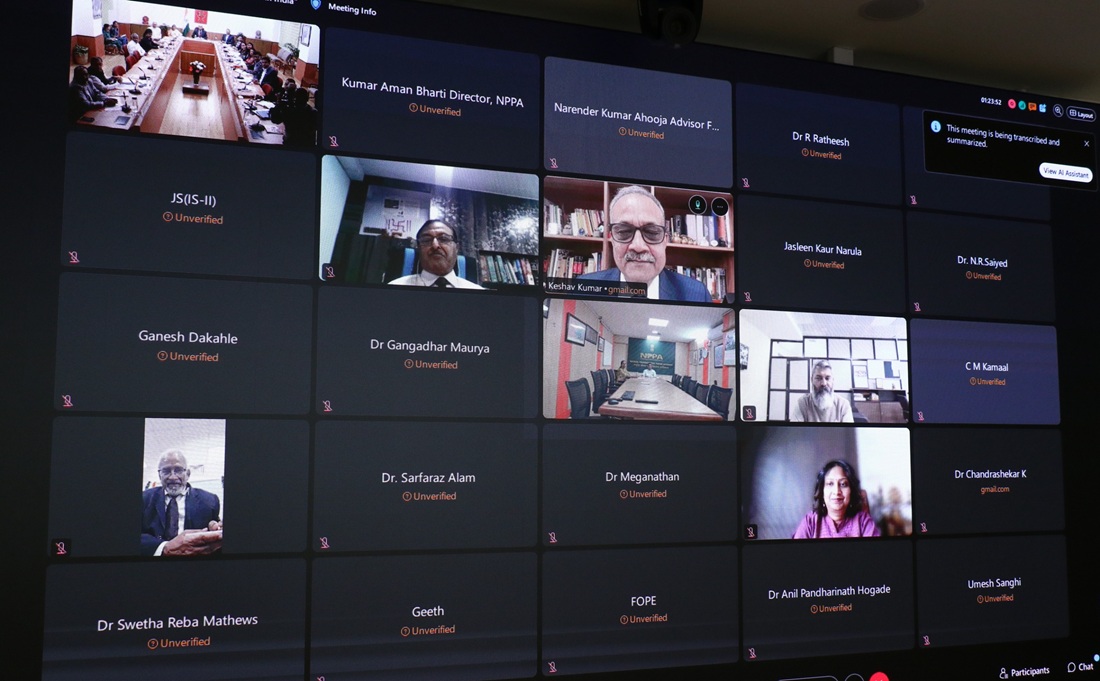
Ms. Nishtha Tiwari, Joint Secretary, MHA, highlighted key interventions by the Ministry to combat the scourge of spurious drugs. She also underscored the critical importance of addressing this issue. Shri Chandrashekhar Ranga, Joint Drugs Controller (DCGI), highlighted the steps already undertaken by the drug regulatory authorities, including coordinated inspections, strengthening of surveillance systems and enhanced training of drug inspectors. He emphasised the need for continued capacity building to address emerging challenges. Shri Prashant Reddy T., author of The Truth Pill, underscored the importance of rigorous quality assurance and transparency. He also highlighted regulatory and bioequivalence concerns, observing that not all generic formulations necessarily behave identically to the innovator drug.
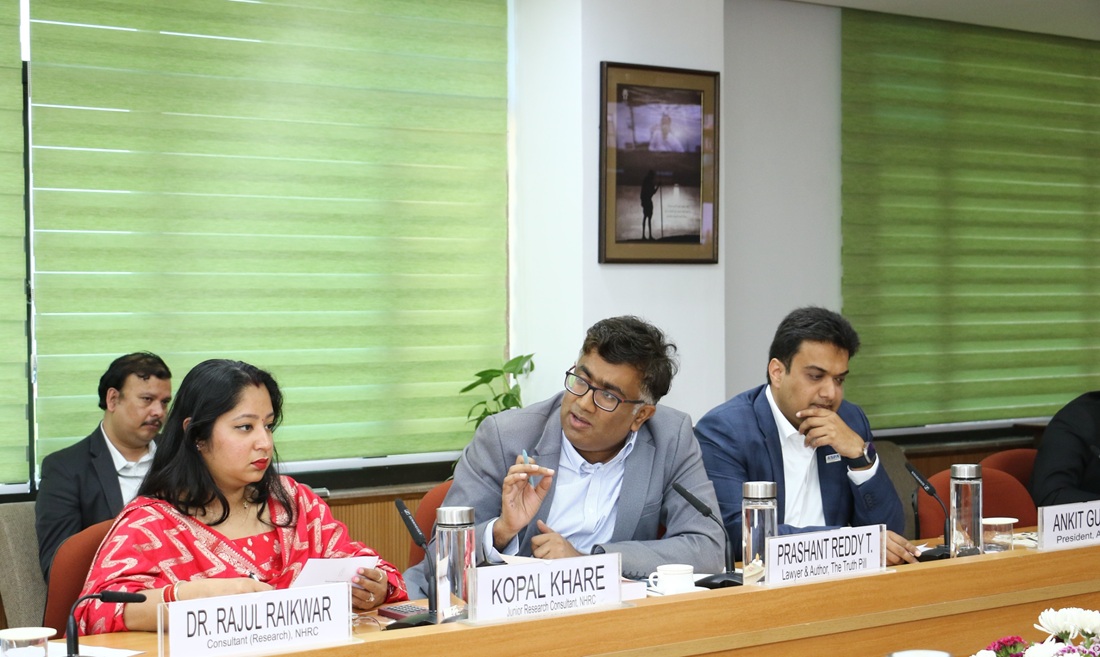
The discussion also examined recent enforcement trends, including coordinated inter-state investigations, invocation of organised crime provisions in counterfeit drug cases and the evolving jurisprudence of the Supreme Court and High Courts relating to prosecution, police jurisdiction, victim rights and trial procedures. The participants were invited to submit further detailed written suggestions to the Commission to enable NHRC to finalise its recommendations.
The other multi-sectoral participants and stakeholders included Ms. Anupama James, AIG, National Investigation Agency; Shri P. Krishnamurthy, Chairman, NPPA; Ms. Sai Ahlladini Panda, Member Secretary, NPPA; Dr. Keshav Kumar, IPS(Retd.), Indian Pharmaceutical Alliance; Shri Om Prakash Sadhwani, Joint Commissioner (Retd.), FDA; Dr. N.R. Saiyad, Deputy Commissioner, Food and Drug Controller Administration (FDCA); Dr. Bhoomika Patel, Dean, School of Pharmacy, NFSU; Dr. P.K. Sharma, Professor and Head, Department of Pharmacology, SLB Medical College; Prof (Dr.) Yogendra Kumar Gupta, President, AIIMS Kalyani; Shri Ankit Gupta, President, ASPA; Shri Harish K. Jain, National President, Federation of Pharma Entrepreneurs (FOPE); Shri Narendra Ahooja, Regulatory Advisor, FOPE; Shri Sandeep Sikaria, FOPE; Dr. Ilyas K.P.A., Deputy Director Bureau of Police Research and Development (BPR&D); Shri Dube Patil, FDA Commissioner, Maharashtra.
Some of the other suggestions that emanated from the discussions were as follows:
• There is a need to establish a comprehensive, centralised databank on spurious and sub-standard medicines, integrating inputs from enforcement agencies, regulators and states;
• Technological interventions should be done to facilitate predictive analytics, pattern recognition, supply-chain mapping and early risk detection;
• Capacity-building of Drug Inspectors through structured and periodic training programmes should be institutionalised;
• A formal feedback mechanism may be introduced to document field-level investigative processes adopted by trained officers, including evidence collection, prosecution strategy, and inter-agency coordination to serve as a model protocol for nationwide adoption;
• A sustained and intelligence-driven vigilance framework is essential. Preventive surveillance, market sampling and coordinated inspections should be strengthened, with emphasis on identifying repeat offenders and vulnerable supply-chain nodes;
• Best practices from states demonstrating effective regulatory performance should be systematically documented, benchmarked and replicated across jurisdictions through inter-state coordination platforms;
• Consideration may be given to establishing a coordinated centre–state joint enforcement mechanism dedicated to monitoring and combating spurious and sub-standard drugs; and
• Take appropriate steps to ensure that pending cases currently before Judicial Magistrate First Class (JMFC) courts or other subordinate courts are transferred to the competent Sessions Courts in light of the Supreme Court judgment that offences under the Drugs and Cosmetics Act are triable exclusively by Sessions Courts.
***