


NHRC, India organises a National Conference on the theme ‘Water as the Elixir of Life: Advancing Human Dignity through the Right to Water’ on its 33rd Foundation Day in New Delhi
Press release
National Human Rights Commission
New Delhi: 12th October 2026
NHRC, India organises a National Conference on the theme ‘Water as the Elixir of Life: Advancing Human Dignity through the Right to Water’ on its 33rd Foundation Day in New Delhi
Emphasising action must begin immediately, NHRC Chairperson, Justice V. Ramasubramanian says, the present generation owes a responsibility to preserve natural resources for future generations
The Conference deliberates on various human rights dimensions of water security, conservation and sustainable management
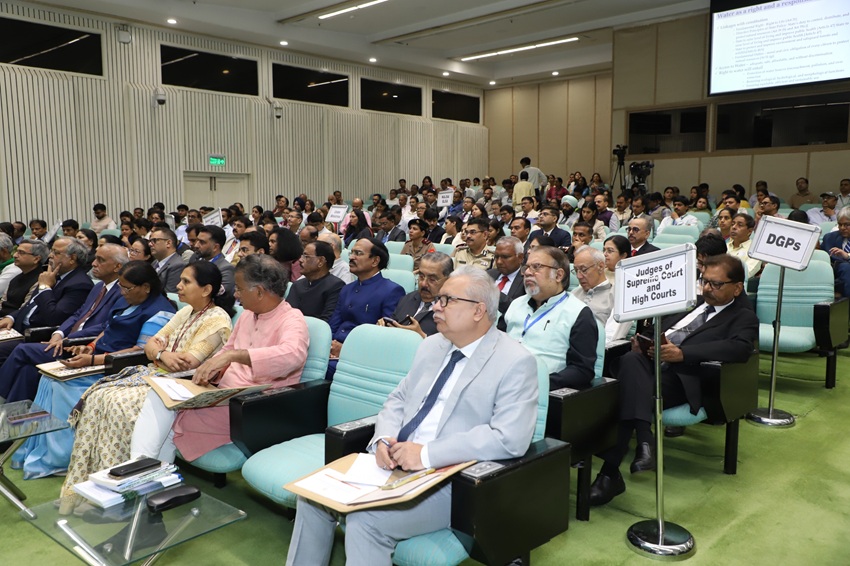
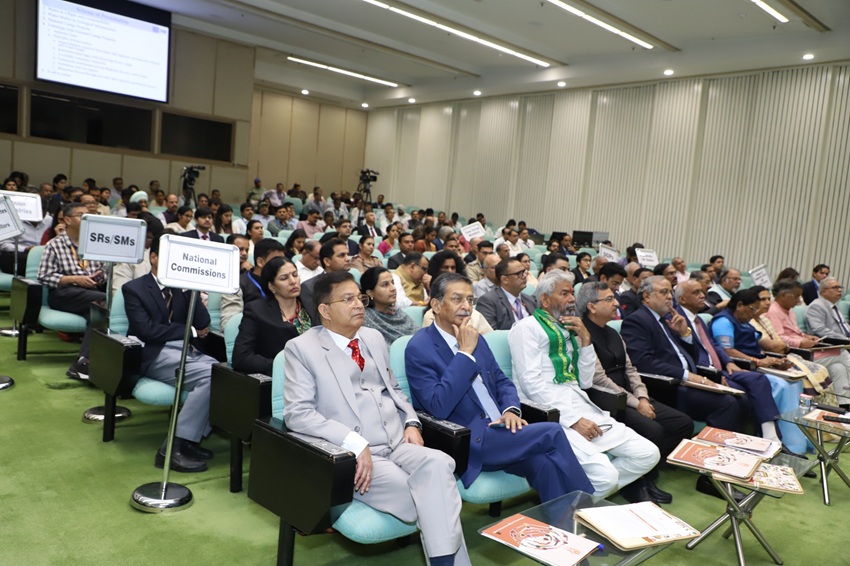
The National Human Rights Commission (NHRC), India organised a National Conference on the theme ‘Water as the Elixir of Life: Advancing Human Dignity through the Right to Water’ at Vigyan Bhawan, New Delhi today, as part of the celebrations marking its 33rd Foundation Day. The Conference brought together representatives of government institutions, development organisations and other stakeholders to deliberate on the human rights dimensions of access to safe drinking water, sustainable management of water resources, rejuvenation of water bodies, community participation and the need to strengthen institutional mechanisms for ensuring water security.
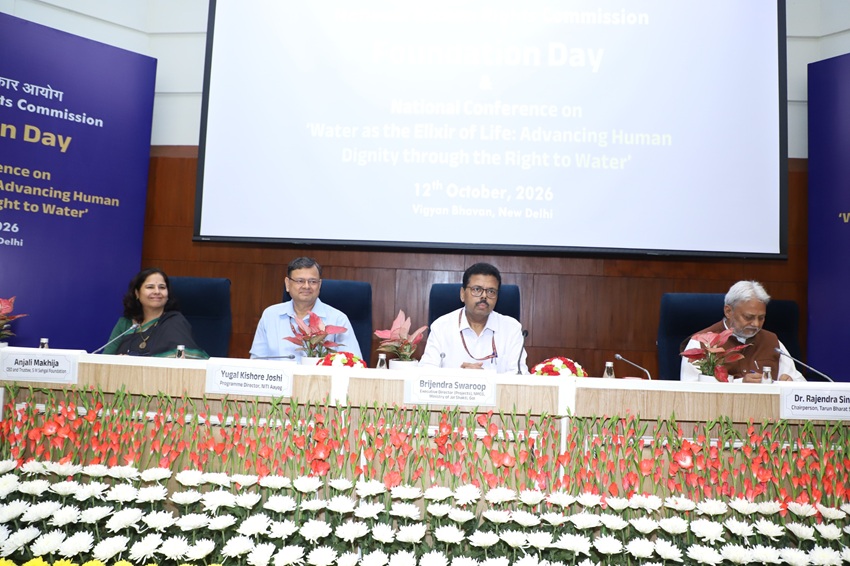
Addressing the first session on ‘Water conservation, sustainability and community participation’ Shri Brijendra Swaroop, Executive Director (Projects), National Mission for Clean Ganga, Ministry of Jal Shakti emphasised that non-discriminatory access to adequate, safe and affordable water is fundamental to human dignity. Outlining the Namami Gange Programme, he highlighted its Integrated River Basin Management approach and the objectives of ensuring Nirmal Dhara (unpolluted flow), Aviral Dhara (continuous flow) and protection of the Ganga’s geological and ecological integrity. The programme comprises 527 projects with a sanctioned cost of approximately Rs 43,326 crore, covering pollution abatement, ecological restoration, biodiversity conservation, community participation, research and livelihood enhancement.
He stressed the need for comprehensive wastewater management, maintenance of ecological flows, protection of floodplains, wetland restoration and biodiversity conservation. Referring to improvements in water quality in several stretches of the Ganga, he observed that the success of rejuvenation efforts should be assessed through environmental outcomes, including water quality, biodiversity and ecosystem functioning, rather than expenditure or the number of completed projects alone. He called for scientific mapping of water bodies, catchment-based planning, institutional convergence and community participation, emphasising that conservation must precede restoration.
Shri Yugal Kishore Joshi, Programme Director, NITI Aayog highlighted India’s water-security challenges, noting that the country has approximately 4% of the world’s freshwater resources but nearly 18% of its population. Per capita water availability has declined to approximately 1,300–1,400 cubic metres annually, below the water-stress threshold of 1,700 cubic metres. He emphasised integrating traditional water-harvesting practices with modern scientific methods, strengthening Gram Panchayats, preparing water budgets and addressing encroachment.
Citing a community-led initiative covering approximately 800 villages, in which water-body rejuvenation had been completed in 731 villages at an approximate cost of Rs. 3 lakh per water body, he highlighted the importance of community labour and productive use of excavated silt. He called for stronger local institutions, improved monitoring and wider replication of successful conservation initiatives.
Ms.Anjali Makhija, CEO and Trustee, S M Sehgal Foundation highlighted the importance of collaboration among communities, government, development organisations, academia and other stakeholders in addressing water and agricultural challenges. She outlined the Foundation’s work on groundwater recharge, supplementary surface-water storage, rainwater harvesting in schools, water quality and climate-smart, water-efficient agriculture, including drip and sprinkler irrigation and laser land levelling.
She emphasised the role of women’s groups and village development committees in identifying priorities, contributing resources and maintaining water structures. Stressing the need to work in coordination with local and district administrations, she advocated combining traditional knowledge with scientific expertise through GIS mapping, soil-moisture and water-quality monitoring as well as third-party assessments. She also called for affordable and accessible technology, greater philanthropic and CSR investment in water and agriculture, besides the development of a scientifically designed water-credit system.
Dr. Rajendra Singh, Chairperson, Tarun Bharat Sanghemphasised that water has its own rights and that rivers must remain nirmal (pure) and aviral (flowing uninterruptedly), with their ecological integrity protected alongside the human right to water. Reflecting on India’s natural wealth and its decline, he highlighted his experience of restoring 23 rivers through community participation, traditional water-conservation practices and ecological restoration.
He stressed that the right to water must go hand in hand with the responsibility to protect rivers and their natural ecosystems. Emphasising that knowledge and advocacy must translate into meaningful environmental action, he called for drawing upon traditional wisdom to conserve natural resources, restore rivers and preserve ecological balance for future generations.
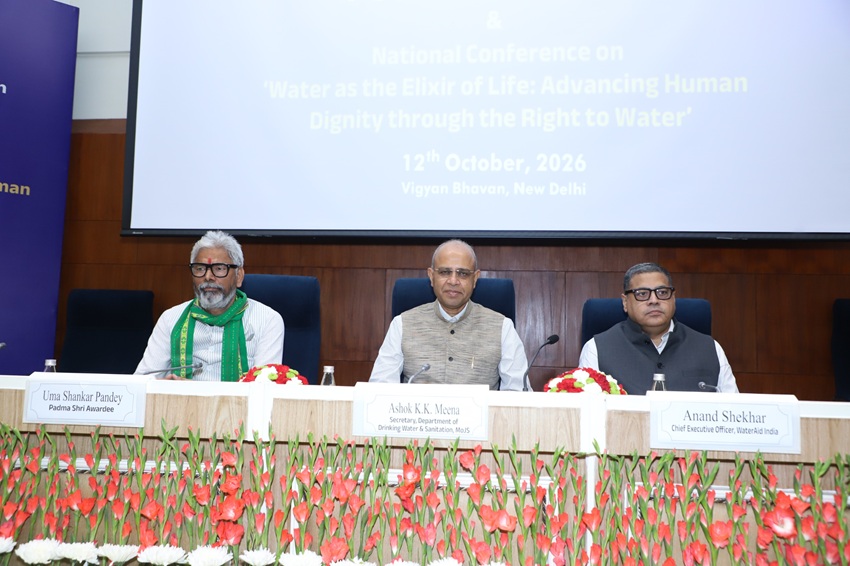
Addressing the second session on ‘Strengthening drinking-water services and local governance’ Shri Ashok K. K. Meena, Secretary, Department of Drinking Water and Sanitation, Ministry of Jal Shakti emphasised that safe drinking water is integral to human dignity, public health and the right to life under Article 21 of the Constitution.
Referring to the Jal Jeevan Mission, launched in 2019, he stated that approximately 82% of the planned water-connection infrastructure had been created. He noted that approximately 25% of blocks were in critical, semi-critical or over-exploited groundwater categories. Surface water-dependent schemes had increased from 15% to 48%, while groundwater-dependent schemes had declined from 85% to 52%.
He called for village-level water budgeting, source sustainability, digital monitoring and stronger Gram Panchayats and Village Water and Sanitation Committees. Highlighting water-quality surveillance, he noted that approximately 2.4 million women had been trained to use field-testing kits and upload data for remedial action. He stressed interdepartmental convergence and referred to completing infrastructure under Jal Jeevan Mission 2.0 by December 2028, ensuring safe, reliable and sustainable drinking-water services.
Shri Uma Shankar Pandey, noted social worker, farmer and groundwater conservationist emphasised the vital importance of water conservation through collective stakeholder efforts. He highlighted concerns regarding the commercialisation and wastage of water and stressed that ensuring access to safe drinking water is a shared responsibility of the Government and the community. He underscored the need for water literacy, community participation and revival of traditional water-management practices. Using the example of a little bird attempting to extinguish a forest fire, he highlighted the significance of individual contributions. Emphasising the importance of awareness creation, he asserted that building a New Bharat must begin with individual responsibility. He reiterated his slogan, “Khetmein med, med par ped”, advocating tree plantation on agricultural field bundsas a sustainable water-conservation practice.
Shri Anand Shekhar, CEO, Water Aid India appreciated the NHRC, India’s focus on water as a fundamental human right. He stressed that every household tap must be supported by a sustainable water source to ensure reliable access. Recalling that sanitation coverage in India was below 20% in 2014, he highlighted the progress achieved in eliminating open defecation and extending sustainable sanitation services to all rural households within five years through political leadership, public investment and community participation.
He noted that approximately 86% of households now have access to drinking-water services through functional household tap connections. He also highlighted the opportunity presented by the allocation of approximately Rs. 8 lakh crore placed at the disposal of Gram Panchayats, of which 50% earmarked for water and sanitation, enabling nearly 2.5 lakh Gram Panchayats to strengthen service delivery. Emphasising source sustainability under the Jal Jeevan Mission, he called for political and administrative ownership, adequate public financing, inter-ministerial coordination, multi-stakeholder partnerships and greater community mobilisation. He underlined that the objective must go beyond coverage to ensure “water for everyone and for always” through reliable, quality and sustainable drinking-water services.
In the concluding session, Justice V. Ramasubramanian, Chairperson, NHRC expressed gratitude to the participants and highlighted the significance of the PanchBhoota, the five elements of nature, in sustaining life and maintaining ecological balance. Reflecting on the properties of water, he appreciated the collaborative approach to conservation advocated by the panellists and stressed collective efforts and stakeholder participation. He highlighted the contradiction between reverence and action, observing that society often fails to protect what it reveres, citing women and water as examples. He called for responsible behaviour and sustained conservation efforts to bridge this gap.
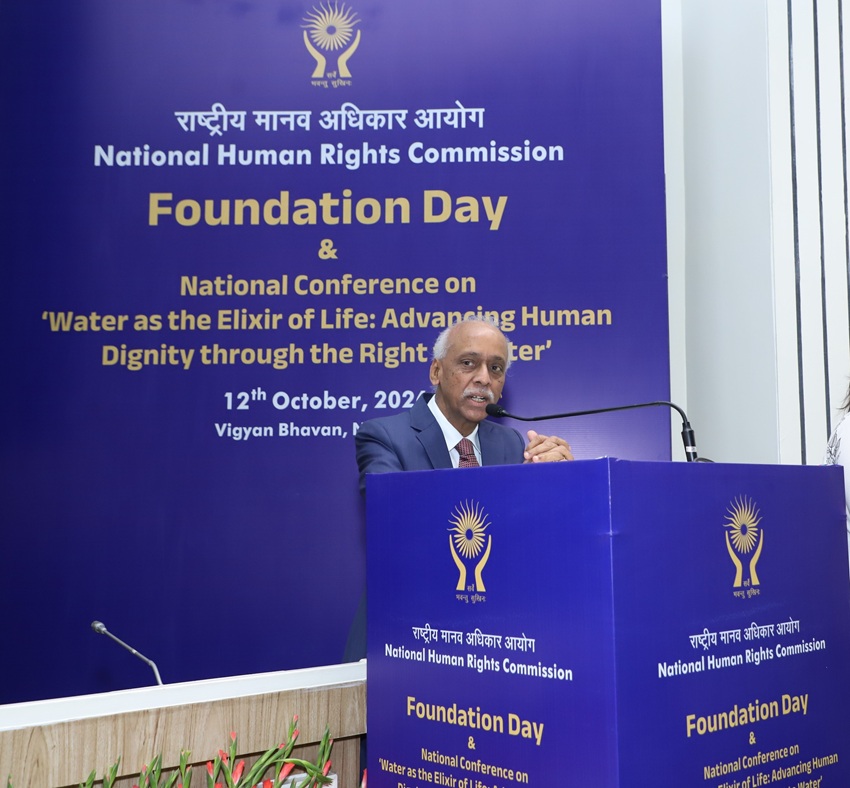
The Chairperson emphasised that conservation efforts must begin immediately, noting that the present generation has benefited from the efforts and sacrifices of its ancestors and has a responsibility to preserve natural resources for future generations. He underscored the cumulative impact of individual and collective efforts, stressing that conservation initiatives require a long-term vision, even when results take decades to emerge. He called for timely, sustained and collaborative action to safeguard water resources for present and future generations.
Shri Piyush Goyal, Secretary General, NHRC summarised the deliberations of the two thematic sessions. He emphasised the urgency of addressing climate change and severe groundwater depletion through decentralised, community-led governance involving Gram Panchayats, village-level water and sanitation committees, women’s groups and civil society. He stressed that, although significant ground-level work remained, close coordination among government agencies, civil society and local communities would help ensure a positive and sustainable way forward.
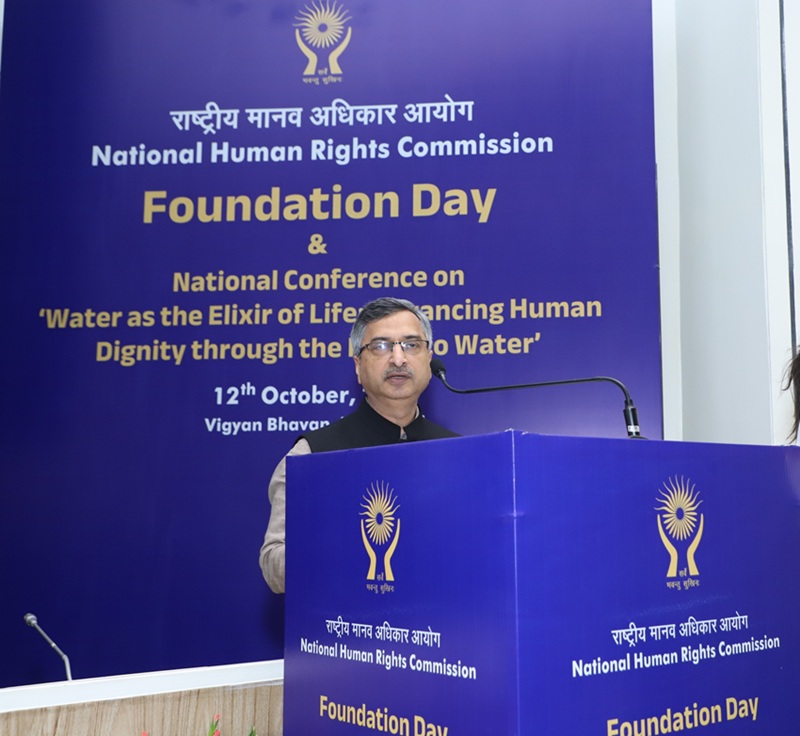
Shri Samir Kumar, Joint Secretary, NHRC, India delivered the vote of thanks expressing gratitude to the Chief Guest, the Chief Justice of India, for accepting the invitation and sharing his insights.
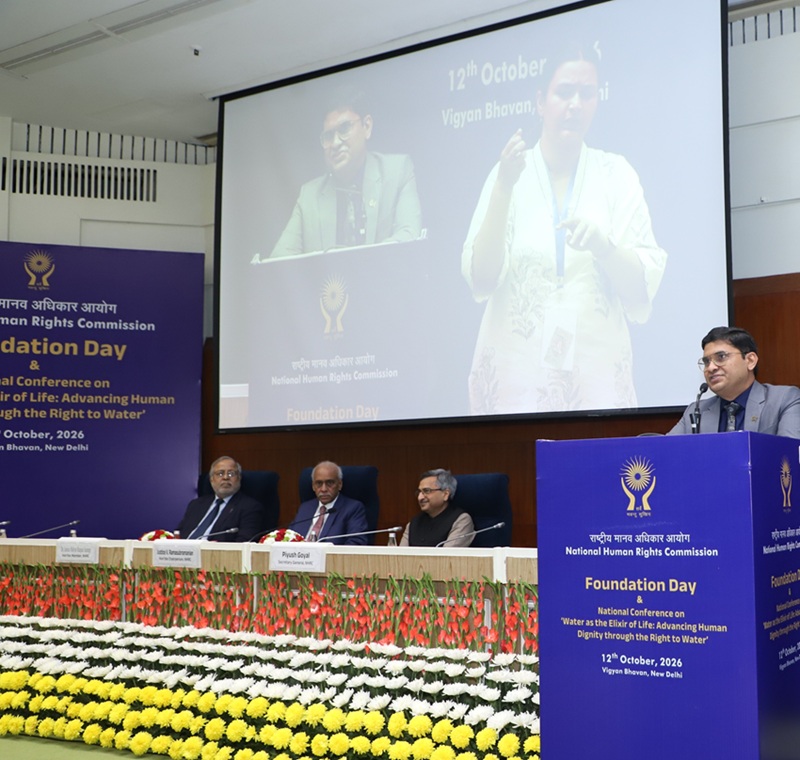
He also thanked the NHRC Chairperson and Members for their guidance and leadership and representatives of Ministries, government departments, civil society organisations and other participants for their valuable contributions. He acknowledged the efforts of all those involved in organising the conference and reiterated the collective commitment to the promotion and protection of human rights.
*****