


NHRC, India’s fifth ITEC Executive capacity-building programme on human rights in partnership with the MEA for senior functionaries of NHRIs of the Global South, begins in New Delhi
Press release
National Human Rights Commission
New Delhi: 14th September 2026
NHRC, India’s fifth ITEC Executive capacity-building programme on human rights in partnership with the MEA for senior functionaries of NHRIs of the Global South, begins in New Delhi
Inaugurating the six-day programme, NHRC, India Chairperson, Justice Shri V. Ramasubramanian, says shifting social values in a rapidly changing world pose serious challenges to human rights
Highlights emerging technologies raising questions on the Right to life after death, Right to be forgotten or Right to erasure, presenting both challenges and potential advantages for human life
In this backdrop, platforms such as the ITEC Capacity Building Programme on Human Rights initiated by NHRC, India acquire significance
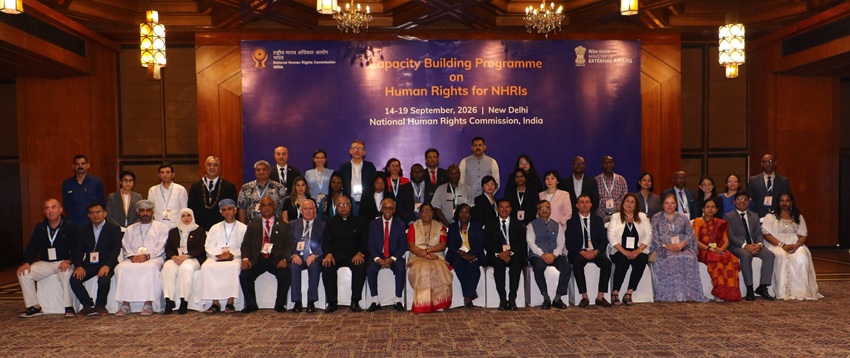
The fifth Indian Technical and Economic Cooperation (ITEC) Executive Capacity Building Programme on Human Rights for National Human Rights Institutions (NHRIs) of the Global South, organised by the National Human Rights Commission (NHRC), India, in partnership with the Ministry of External Affairs (MEA), began in New Delhi today.
About 38 participants from NHRIs of 14 countries of the Global South are participating in the programme. The participating countries are Algeria, Chile, Ecuador, Ethiopia, Indonesia, Kazakhstan, Kenya, Kyrgyzstan, Malaysia, Oman, Samoa, South Africa, Tajikistan and Zimbabwe.
Chairperson, NHRC, India Justice V. Ramasubramanian, in his inaugural address highlighted India’s longstanding and excellent relations with the participating countries. He said that the programme aims to share knowledge and apply it for the betterment of society. He emphasised that India has a long tradition of promoting and sharing noble thoughts for achieving the common goal of human welfare.
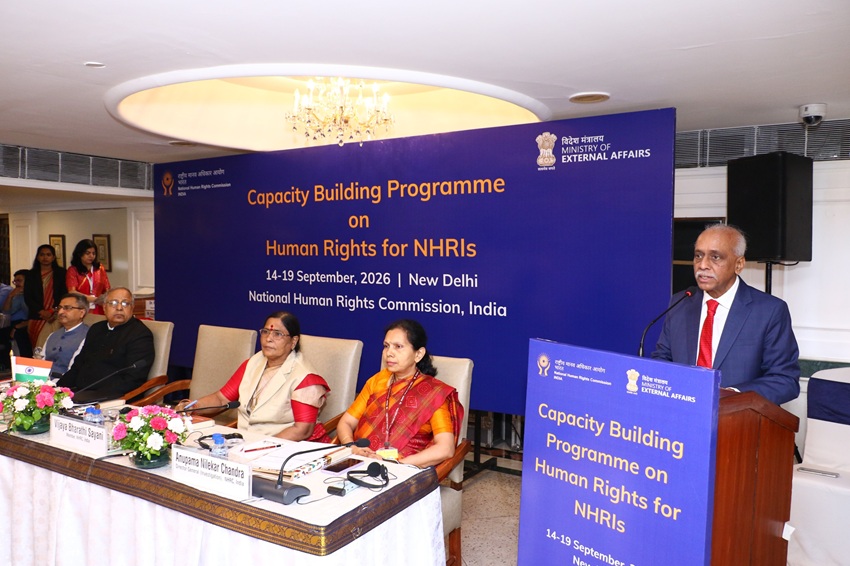
In this context, he referred to the ancient Indian traditions reflected in the Rigveda and Taittiriya Upanishad of the Yajurveda. He also referred to the ancient Greek concept known as Xenia, which casts a responsibility on hosts to respect their guests and on guests to share their knowledge.
The Chairperson acknowledged the various constitutional frameworks for promoting and protecting human rights in the participating countries. He expressed hope that the participants would find the programme enriching and meaningful, develop a lasting association with NHRC, India and continue their engagement with the Commission.
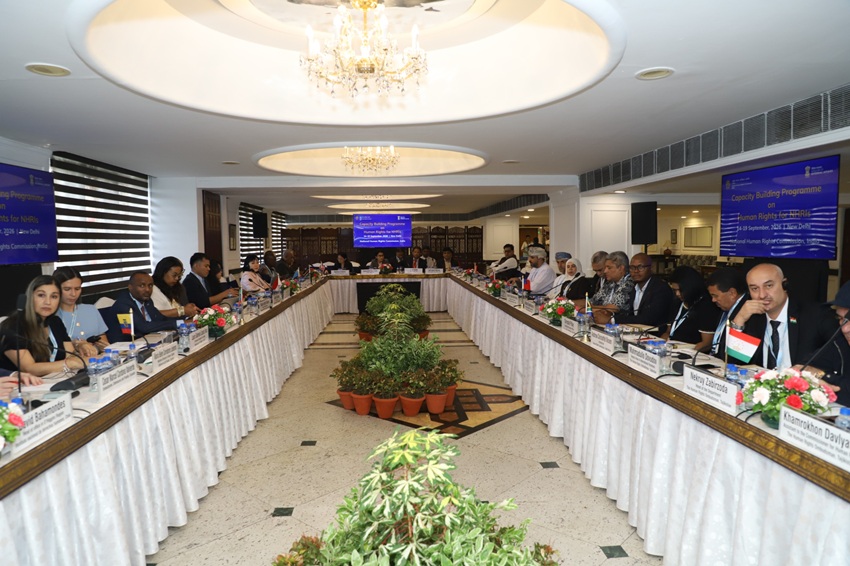
Later, addressing the first session after the inauguration, Justice Ramasubramanian said that shifting social values in a rapidly changing world are posing serious challenges to human rights. He observed that over the last 100 years, the very concept of family has undergone significant change, to the point that questions are now being raised about whether the family means only a man and a woman.
He also highlighted third and fourth-generation rights and the challenges posed to human rights by emerging technologies, including synthetic technology, industrial technology, genome technology and digital technology. Justice Ramasubramanian noted that questions relating to the right to life after death, the right to be forgotten or the right to erasure are being discussed both as challenges and as potential advantages for human life.
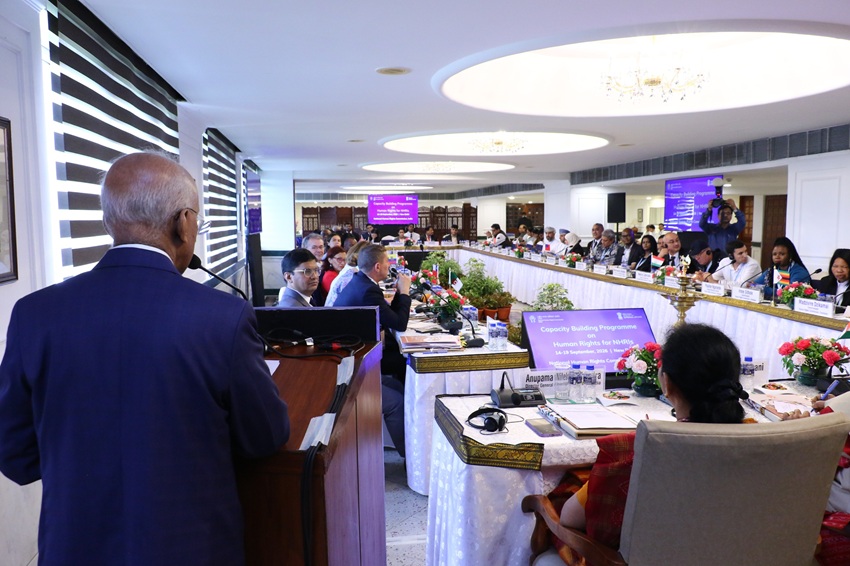
Referring to the 2025 Global Peace Index of the Sydney-based international think tank, the Institute for Economics and Peace, the Chairperson said that 78 countries in the world are currently engaged in armed conflicts outside their borders. These conflicts resulted in severe consequences for human civilisation and the global economy, displacing nearly 122 million people as refugees or internally displaced persons and causing an estimated loss of about 20 trillion dollars to the global economy.
He emphasised that it is in this context that the true meaning and importance of human rights must be understood. Against this backdrop, he said, platforms such as the ITEC Capacity Building Programme on Human Rights initiated by NHRC, India, acquire significance.
During the inaugural session, NHRC, India Member, Justice (Dr.) Bidyut Ranjan Sarangi emphasised the need to consider the meaning and purpose of the capacity-building programme carefully. He underscored the importance of continuing friendship and cooperation, particularly as the international community passes through a critical period and reiterated the need to sustain the spirit of peace and dialogue.
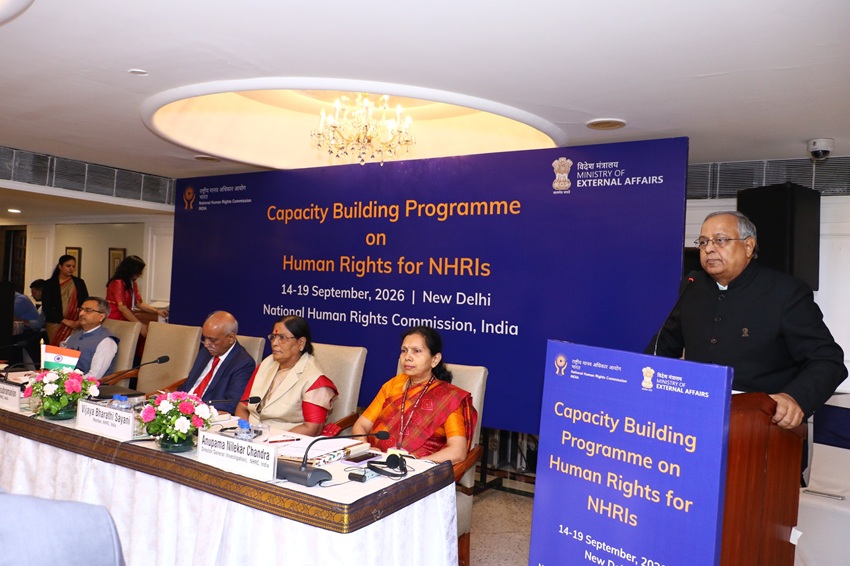
Welcoming representatives from different countries, he observed that such interactions provide an encouraging platform for greater understanding and cooperation. He called for collective efforts to work together and do better for the world, expressing hope for a more peaceful and harmonious future.
NHRC, India Member, Smt. Vijaya Bharathi Sayani invoked the philosophy of Vasudhaiva Kutumbakam – the world as one family – as the ethos binding the participants together. Highlighting India’s scale and diversity, she noted that the country, despite its vast population, 22 official languages, diverse religious traditions and varied customs and festivals across its 28 States and eight Union Territories, remains united and stable through its culture of pluralism.
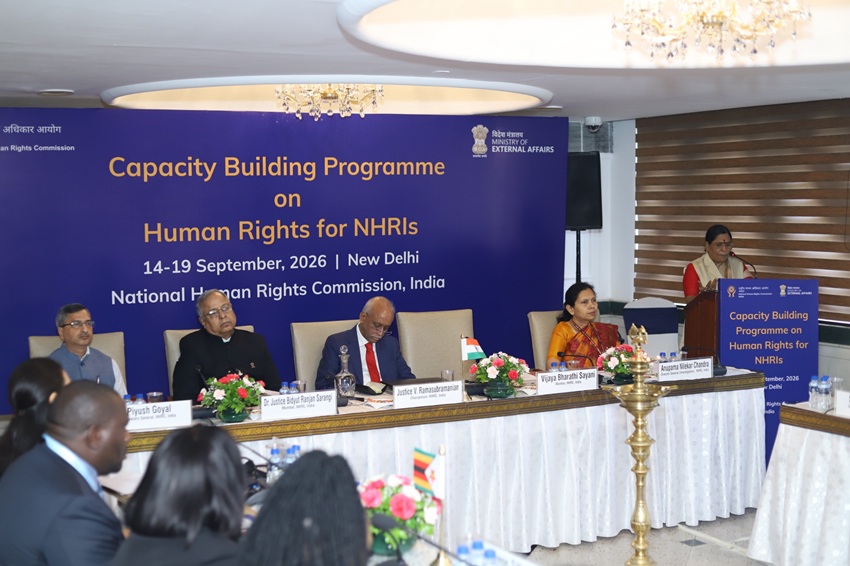
She urged respect for differing viewpoints and emphasised the protection of the vulnerable and the dignity of every individual as enduring civilisational values. She affirmed compassion, accountability and equity as the guiding principles of the Commission in its role as guardian of the rights of every individual.
NHRC, India Secretary General, Shri Piyush Goyal welcomed the Chairpersons, delegates and representatives of the 14 NHRIs attending the fifth edition of the programme. He highlighted the steady growth of the ITEC initiative since its first edition in 2023 and noted that it has continuously evolved based on feedback from previous years to make it more useful for participating institutions.
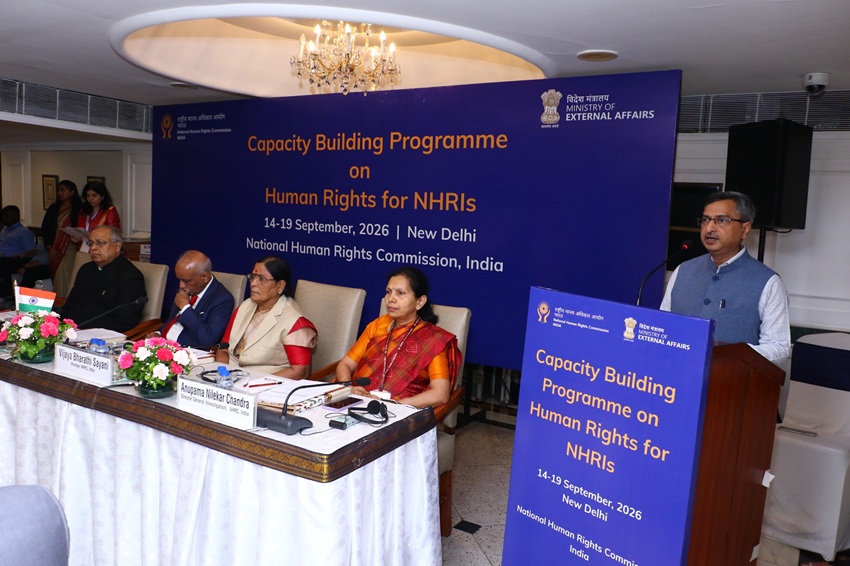
He highlighted the practical orientation of the programme, comprising lectures, thematic sessions, interactive discussions, presentations by resource persons, country presentations and field visits. He encouraged delegates to engage with resource persons and one another, drawing on the experience of institutions operating within different legal frameworks.
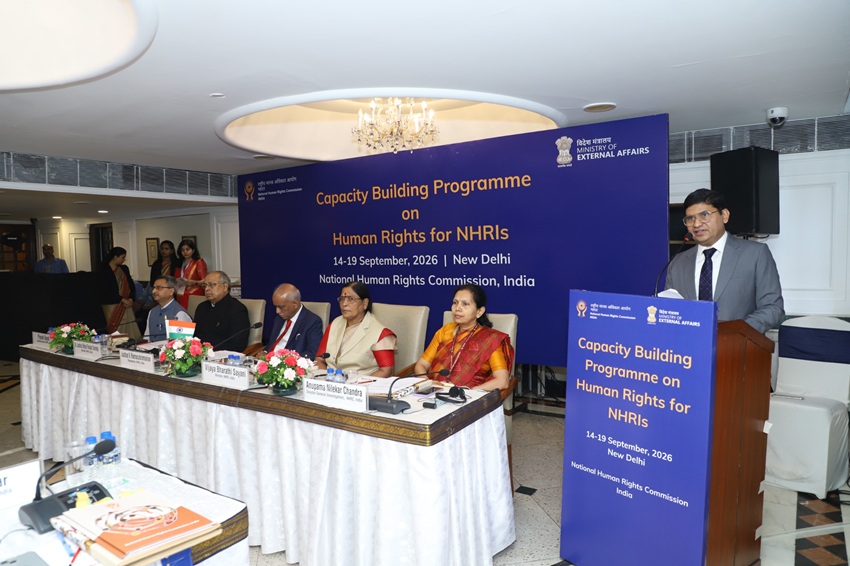
NHRC, India Joint Secretary, Shri Samir Kumar extended a warm welcome to all participants and stated that the ITEC programme is conceived not merely as capacity building, but as a foundation for friendship, professional exchange and lasting partnership among NHRIs of the Global South. He emphasised that bringing together colleagues from different institutional backgrounds provides an opportunity to find common ground and strengthen one another’s institutions.
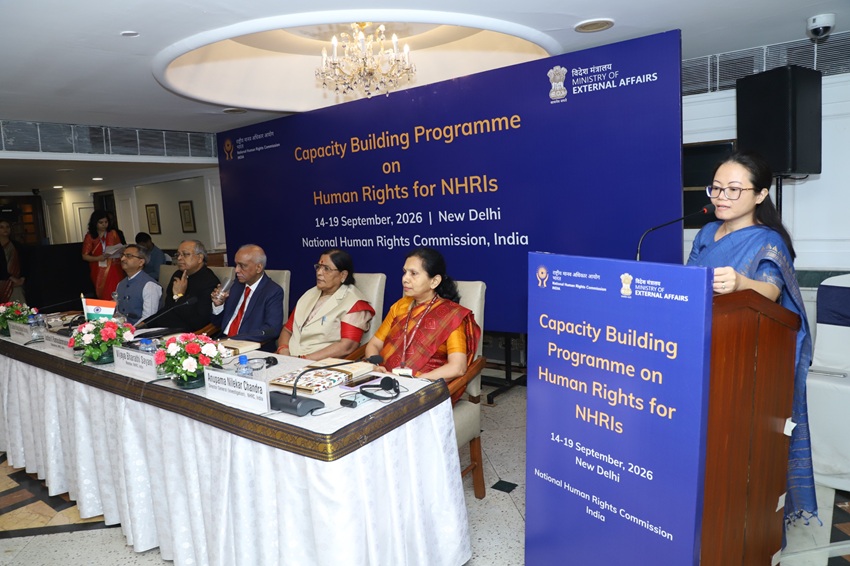
In the Vote of Thanks proposed by NHRC, India Joint Secretary, Smt. Saidingpuii Chhakchuak, the support received from the MEA in organising the programme and the collaborative participation of the delegates were given a warm acknowledgement.
*****